
I am writing this not as a political analyst, nor as a member of the opposition, nor as a journalist seeking a headline. I am writing as a citizen of this island—one who has watched the past few years with a mixture of exhaustion, cautious hope, and, lately, a quiet, gnawing worry. I write not to demand, but to plead. I write not to accuse, but to ask you to look again at the small, sacred things.
I watched, as many of us did, the photos from the Sinhala Hindu New Year. I saw you standing with party members. I noticed the absence of your own home and the private hearth. I will not pretend to know the state of your heart or the reasons for your New Year celebration arrangements. I take no stance on whether you are a good father, son, or husband. That covenant is between you, your kin, and whatever higher power you answer to.
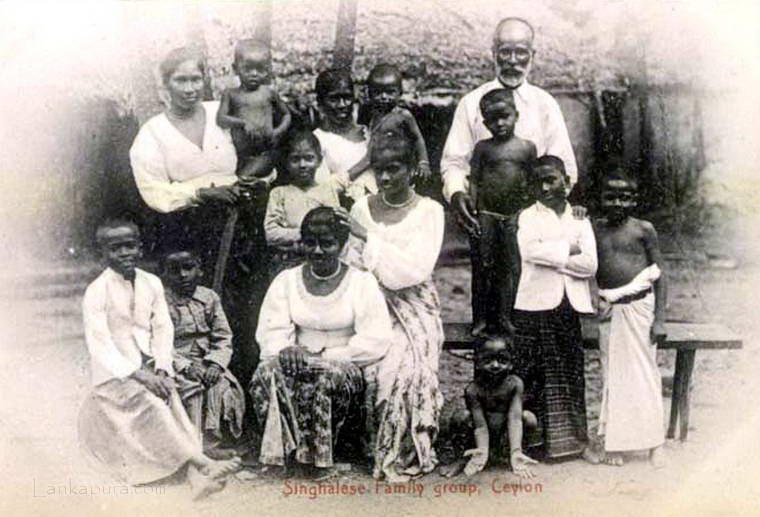
But I am writing to you about our family. The Sri Lankan family. The small shopkeeper in Matara, the farmer in Anuradhapura, the three-wheeler driver in Jaffna. And I am writing because I remember your voice, not so long ago, fiercely denouncing the very economic machinery you now find yourself operating.
The Spectre in the Room
You see, Sir, I have been trying to understand a feeling that has settled over this country like the monsoon damp. It is a feeling that we are drifting. People voted for change, for a system that would protect the kade owner from the multinational chain, the local farmer from the global commodity price. We heard you speak of sovereignty and the dangers of the IMF.
Now, the IMF is your partner. You tell us it is the only way, the bitter medicine. I am not an economist; I cannot argue the ledger with you. Perhaps you are right. Perhaps there was no other door. But here is what I can feel, and what I plead with you to reflect on. I do not conclude you are a neoliberal, though I must admit that I am not very clear what you approach to our economy is. I do not know the private constraints of your office. But I must tell you, honestly, that the shape of things feels like the thing you once warned us against. It feels like the market is winning, and the family—that small, stubborn unit of care we discussed—is losing. Or, at least there is no change in that status quo. Even signs of such a change.
An Appeal for Next Year
This brings me back to the New Year photos.
I am not asking you to stage a family portrait next April to fool the newspapers. Sri Lankans are too weary for that kind of theatre now. We have seen too much performance and not enough presence before you.
What I plead with you to consider for the next New Year is this: Can you find a way to signal, through action or sincere word, that you understand the difference between the Covenant of Care and the Balance of Payments?
Perhaps it is not a photo with your wife and children. Perhaps it is a public statement that simply says: “I believe that family is the most important unit of our society.” That is the appeal. Not for a better photo-op, but for a message that makes the family hearth fire, and family itself, feel important, not only as a simple nakath tradition, but as a statement reinforcing our core values. And please note that I mean something deep and broad when I say family.
In a neoliberal world that measures a person’s worth by their output, the concept of family insists that we have value simply because we are. And in an economy in which everything is monetised, family is the last stubborn, beautiful, inefficient pocket of grace. We should promote it not to enforce a standard mother-father-son-daughter script, but to ensure that every human being has access to the only thing that ever truly survives us: the bond of a small group of people, whether blood-related or not, who promised to hold on. Neoliberals do not like the concept of family, which is the place where we are valued for being, not producing. Family is the protection against commodifying our very being.
A Final, Humble Observation
You know our history. You know the story of Budurajananvahanse returning to Kapilavastu. He did not go to the palace to have his picture taken for the edicts. He went to sit with his dying father. That was a private, inconvenient, and holy act. I remember your visit to see your mother when she was in hospital, which everyone respected deeply. We do not need you to be a saint. We just need to know that you remember what it feels like to sit with a dying father, or to watch a child take their first bite of kiribath, without having to calculate the cost of the coconut.
I wish you clarity in the difficult decisions ahead. May you find a way to steer this ship not just toward solvency, but toward the shore of a nation where the family unit is the beneficiary of the economy, not the casualty of it.
With respect and a cautious hope,
A Citizen of Sri Lanka